
Phone
Rockview Health Centre - Building 1, Calgary
Phone
Rockyview Health Centre – Building 1, Calgary

Anal fissure treatment in Calgary depends on whether the fissure is acute or chronic, symptom severity, sphincter spasm, bowel habits, and whether chronic tissue changes have developed. Treatment may include conservative care, prescription therapy, Botox®, or selected clinic-based procedures.
Anal fissure treatment is selected based on how long the fissure has been present, the degree of pain and sphincter spasm, and whether chronic tissue changes have developed.
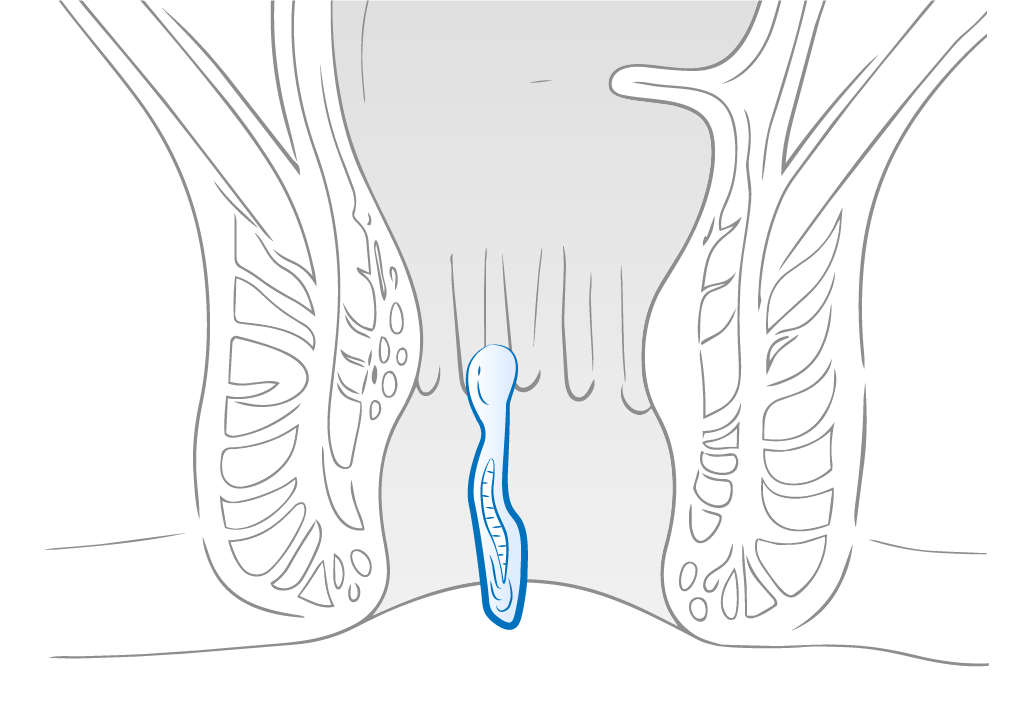
Anal fissure treatment depends on how long the fissure has been present, symptom severity, bowel habits, sphincter spasm, and whether chronic tissue changes are present. A comprehensive anorectal assessment can help determine whether conservative treatment, prescription therapy, Botox®, a clinic-based procedure, or further imaging is appropriate.
Common Symptoms may include:
* Sources include: ASCRS Clinical Practice Guideline for the Management of Anal Fissures, 2023; randomized controlled trial data on topical nifedipine and diltiazem; 2025 meta-analysis of botulinum toxin for chronic anal fissure; and 2025 systematic review of fissurectomy combined with botulinum toxin.
* Published results come from different study populations and treatment protocols and should not be interpreted as direct head-to-head comparisons. Individual outcomes vary.
A chronic anal fissure is not simply a “cut that stays open.” Over time, repeated trauma, muscle spasm, inflammation, and reduced blood flow can create a cycle of delayed healing and repeated re-injury.
Fissure tear → pain → internal sphincter spasm → reduced blood flow → delayed healing → repeated re-tearing → chronic inflammation and scar formation:
This is why some chronic fissures may improve with prescription therapy or Botox®, while others with significant secondary tissue changes may need a clinic-based procedure.
Soft, regular bowel movements, fibre, hydration, stool regulation, avoidance of straining, and supportive measures to reduce repeated trauma to the fissure.
Prescription topical medications may be used to help relax the anal sphincter, reduce spasm, and support healing when appropriate.
Ultrasound or MRI may be recommended when an abscess, fistula, deeper tract, or another complex anorectal condition is suspected.
Botox® may be considered for selected chronic fissures with persistent sphincter spasm or symptoms that have not improved sufficiently with conservative and prescription treatment.
Selected chronic fissures with secondary tissue changes may require treatment such as fissure debridement, sentinel pile removal, or hypertrophied anal papilla removal when appropriate.
A collaborative clinical team focused on supporting healing through anorectal wound care, including allied health guidance, wound assessment, hygiene support, and bowel-management guidance.
Explore Diagnosis-Guided Treatment for Persistent or Chronic Anal Fissures.
Our team can assess your symptoms, fissure duration, bowel habits, sphincter spasm, and chronic tissue changes to help determine the most appropriate treatment approach.
.
What Happens Next?
After you submit the form, our team will contact you as soon as possible, provide any additional information you may need, and help schedule your appointment.
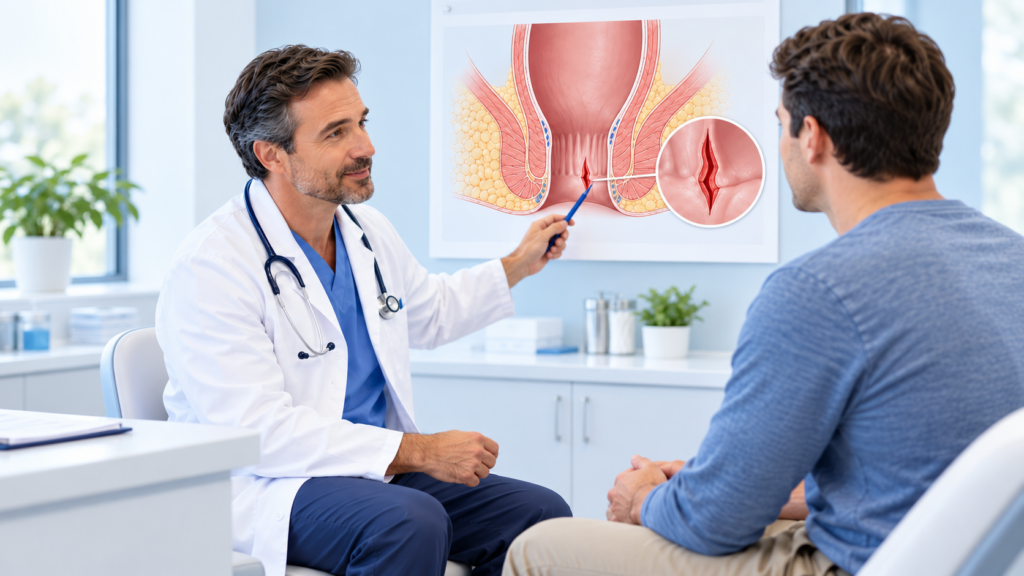
Anal fissures are usually identified through the symptom history and a focused anorectal examination. The goal is to confirm the fissure, determine whether it is acute or chronic, and identify secondary changes or another condition.
Medical Review of pain, bleeding, bowel habits, symptom duration, and whether symptoms are recurring.
External inspection of the anal area to identify the fissure, swelling, sentinel pile, skin tags, or other visible findings.
Digital rectal examination (DRE), when appropriate, to assess the anal canal, tenderness, internal sphincter tone, scar tissue, areas of tightness around the anal verge, and the location of pain.
Anoscopy to assess the anal canal for bleeding, the extent of the fissure, hypertrophied anal papilla, discharge or pus, and other associated internal abnormalities.
Fees depend on the treatment pathway and clinical findings. Your assessment will help determine whether conservative care, prescription therapy, Botox®, a clinic-based procedure, imaging, or referral is appropriate. A treatment estimate can be provided after assessment.
Yes. Many acute fissures improve with bowel regulation, fibre, hydration, stool-softening measures, and other conservative care. Chronic fissures may need prescription therapy, Botox®, or a clinic-based procedure depending on the findings.
A fissure is more likely to be chronic when symptoms persist or recur for more than about 6 weeks, or when secondary changes such as a sentinel skin tag, thickened edges, scar tissue, or a hypertrophied anal papilla are present.
Prescription topical therapy may be used when bowel regulation alone is not enough, especially when sphincter spasm is contributing to pain and delayed healing.
It originates from electricity, but is converted into a specialized medical form that generates controlled heat for treatment. It is very different from the electricity used in daily life and does not cause electric shock. It is widely used in many medical treatments, such as skin procedures, varicose vein treatments, and pain management therapies. Rafaelo uses relatively low power—similar to small electronic
devices—but delivers it in a very precise and controlled way to treat only the hemorrhoid.
Botox® may be considered for selected chronic fissures with persistent internal sphincter spasm or symptoms that have not improved sufficiently with conservative and prescription treatment.
Botox® temporarily reduces internal sphincter spasm. This may improve blood flow to the fissure and give the tissue a better opportunity to heal.
No. Botox® does not physically remove the fissure. It reduces sphincter spasm so the fissure can heal more effectively.
A procedure may be considered when a chronic fissure has significant secondary tissue changes such as scar tissue, a sentinel pile, hypertrophied anal papilla, or persistent abnormal tissue that is interfering with healing.
Depending on the findings, treatment may include fissure debridement, sentinel pile removal, or hypertrophied anal papilla removal.
No. AC Hemorrhoids & Anorectal Centre does not perform lateral internal sphincterotomy.
Yes, although this is not typical for most fissures. Persistent drainage, swelling, recurrent infection, or an external opening may suggest an associated abscess or fistula and require further assessment.
Maintain soft, regular bowel movements, stay hydrated, avoid straining, and follow any medication or preparation instructions provided by the clinic.
Recovery depends on the treatment performed. Most patients are advised to keep stools soft, maintain hydration and fibre intake, follow wound-care instructions when applicable, and attend follow-up as recommended.
Healing time varies. Acute fissures may improve relatively quickly, while chronic fissures can take longer, especially when sphincter spasm or secondary tissue changes are present.
Yes. Recurrence can occur, particularly if constipation, straining, diarrhea, pelvic floor dysfunction, or repeated trauma continues. Long-term bowel regulation is an important part of prevention.
Treatment is based on a comprehensive anorectal assessment, including symptom duration, bowel habits, pain pattern, sphincter spasm, chronic tissue changes, and whether a more complex condition is suspected.
A focused anorectal assessment can help determine whether conservative care, prescription treatment, Botox®, a clinic-based fissure procedure is the most appropriate next step based on your symptoms, fissure duration, anatomy, and clinical findings.