
Phone
Rockview Health Centre - Building 1, Calgary
Phone
Rockyview Health Centre – Building 1, Calgary

Assessment & Treatment for Selected Perianal Abscesses and Anal Fistulas in Calgary.
Painful swelling, tenderness, drainage, or a recurring opening near the anus may be caused by a perianal abscess or anal fistula.
At AC Hemorrhoids & Anorectal Centre, we provide focused anorectal assessment for these symptoms and treatment of selected uncomplicated perianal abscesses and superficial fistulas in an outpatient clinic setting.
Different conditions may present with similar symptoms. Self-diagnosis can lead to incorrect treatment or delayed care.
An anal abscess is a localized collection of infected fluid or pus that develops in the tissues around the anus. It usually occurs when a small anal gland becomes blocked and infected.
Things to know about an anal abscess :
An anal fistula is an abnormal tract or tunnel that connects the anal canal to the skin near the anus. Many anal fistulas develop after a previous anorectal abscess.
Common symptoms include:
Anal fistulas can vary significantly in depth and anatomy. Perianal ultrasound, pelvic MRI, or other specialized imaging may be recommended to further evaluate the fistula tract and confirm the diagnosis.
A superficial subcutaneous fistula is a tract located close to the skin with no meaningful sphincter involvement. Selected cases may be suitable for clinic-based treatment
More complex fistulas may include:
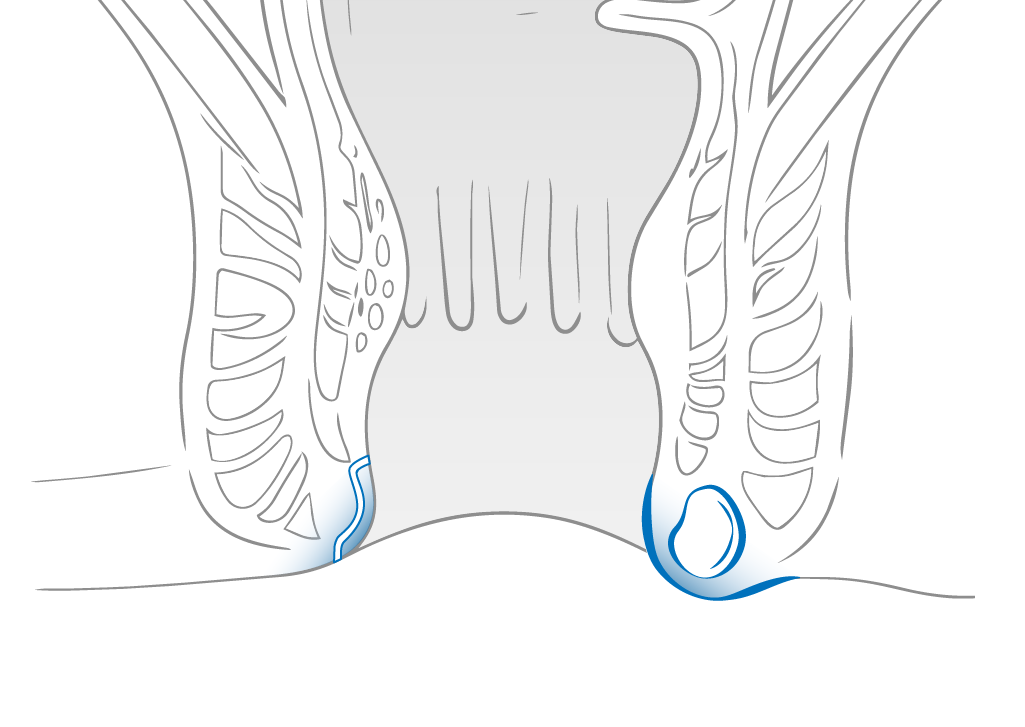
Treatment depends on the size, location, severity, and clinical findings. For a selected superficial perianal abscess, treatment may include:
These fistulas are located close to the skin and have no meaningful involvement of the anal sphincter muscles. Suitability for treatment is determined after clinical assessment and, when needed, review of imaging.
Treatment planning may include:
An abscess may occasionally drain spontaneously and temporarily feel better. However, an underlying infection or fistula tract may remain, so persistent or recurrent symptoms should be assessed.
No. Some abscesses resolve after appropriate treatment, while others may subsequently develop a persistent fistula tract.
Recurrent swelling followed by drainage may indicate that a persistent fistula tract remains beneath the skin.
Antibiotics may be appropriate in selected circumstances, but an established collection of pus frequently requires drainage. Treatment depends on the clinical findings.
No. Only appropriately selected superficial fistulas may be suitable for clinic-based treatment. Deeper or more complex fistulas generally require specialist surgical assessment.
A proper assessment can help identify the cause and guide the next steps.