
Phone
Rockview Health Centre - Building 1, Calgary
Phone
Rockyview Health Centre – Building 1, Calgary
Understand Your Symptoms, Type, and Treatment Options
Our Calgary clinic assesses and treats internal, external, prolapsed, thrombosed, and mixed hemorrhoids.
Hemorrhoidal cushions are normal vascular structures in the anal canal. Hemorrhoidal disease develops when these tissues become enlarged, prolapsed, thrombosed, or otherwise symptomatic.
Hemorrhoids may be internal, external, mixed, or thrombosed. Internal hemorrhoids may also prolapse and are graded according to how far they protrude outside the anal canal.
Bleeding, prolapse, anal lumps and pain can occur with several anorectal conditions. A visible or felt lesion is not automatically a hemorrhoid, and rectal bleeding should not be assumed to come from hemorrhoids without appropriate assessment. Looking for hemorrhoids information in Calgary?
Hemorrhoids can develop when pressure, straining, or changes in the supporting tissues of the anal canal cause hemorrhoidal tissue to enlarge or descend. Some people develop symptoms without one obvious trigger.
Bowel Habits:
Pressure & Body Changes:
Stool Consistency:
Different types of hemorrhoids can produce different symptom patterns.
Internal hemorrhoids may cause:
External hemorrhoids may cause:
Several anorectal conditions can cause bleeding, pain, swelling or a lump, so symptoms alone do not always confirm hemorrhoids.
Common look-alikes include:
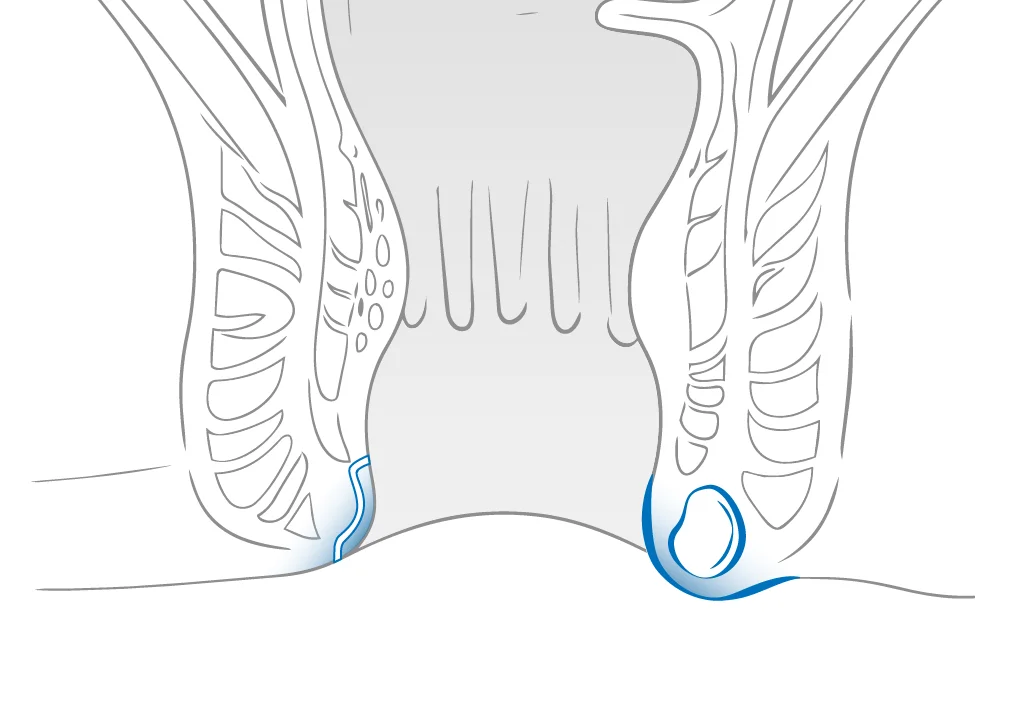
Develop above the dentate line inside the anal canal. They may cause painless bleeding or prolapse.
Develop below the dentate line near the anal opening. They may cause pain, swelling, or a palpable lump.
A combination of internal and external components.
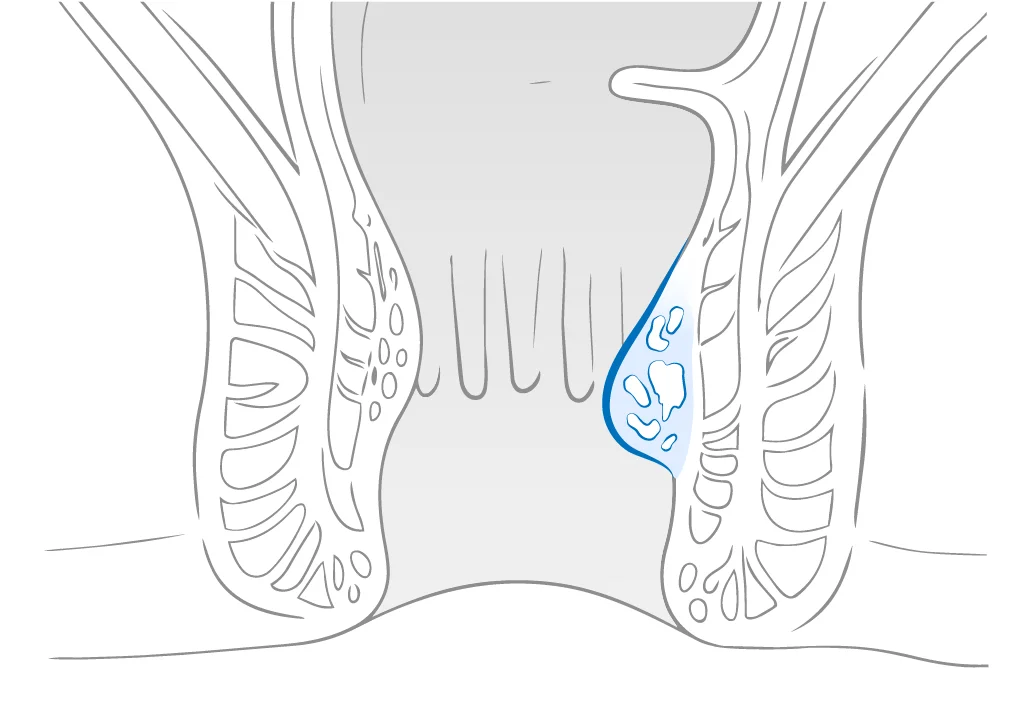
External hemorrhoids with a blood clot, often causing sudden severe pain and swelling.
Internal hemorrhoids that protrude outside the anus during or after bowel movements.
Extensive hemorrhoidal disease involving a large portion or the entire circumference of the anus.
Hemorrhoids are usually identified through your symptom history and a focused anorectal examination. The goal is to determine whether your symptoms are caused by hemorrhoids and, if so, what type is present.
Review your symptoms, including bleeding, pain, prolapse, bowel habits, duration, and whether symptoms are changing or recurring.
External inspection of the anal area to look for external hemorrhoids, thrombosis, skin tags, swelling, fissures, or other visible causes of symptoms.
Digital rectal examination (DRE) to assess the anal canal, tenderness, muscle tone, and whether another condition may be contributing to the symptoms.
Anoscopy to directly assess internal hemorrhoids, prolapse, bleeding sites, and other abnormalities within the anal canal.
Treatment depends on the hemorrhoid type, grade, symptoms, degree of prolapse, and whether internal or external disease is present.
Treatments include:
Mild hemorrhoid symptoms may improve with softer stools, less straining, and time. Persistent bleeding, prolapse, or recurrent symptoms may need further assessment.
Many patients worry that hemorrhoids automatically require surgery, but in most cases, that is not the first step. A large number of patients can be managed with non-surgical or minimally invasive in-clinic treatments. Surgery may be considered only for more advanced or persistent cases, depending on your symptoms and clinical findings. Our approach is to start with the least invasive effective option whenever appropriate and only recommend more advanced treatment when truly necessary.nternal hemorrhoids are located inside the anal canal and often cause bleeding or prolapse. External hemorrhoids are around the anus and may cause a lump, swelling, irritation, or tenderness.
The grading system applies to internal hemorrhoids and describes how much they prolapse. Grade I stays inside, Grade II prolapses and returns on its own, Grade III usually needs manual reduction, and Grade IV remains prolapsed.
The grading system applies to internal hemorrhoids and describes how much they prolapse. Grade I stays inside, Grade II prolapses and returns on its own, Grade III usually needs manual reduction, and Grade IV remains prolapsed.
No. Internal hemorrhoids may bleed or prolapse without significant pain. Sudden severe pain with a tender lump is more typical of a thrombosed external hemorrhoid.
No. Hemorrhoids are a common cause of bright-red bleeding, but fissures and other anorectal or gastrointestinal conditions can also cause bleeding.
Yes. Anal skin tags, thrombosed hemorrhoids, abscesses, fistulas, and other anorectal lesions can also cause a lump or swelling.
Assessment is reasonable when bleeding, prolapse, pain, swelling, or a lump is persistent, recurrent, worsening, or when you are unsure whether the problem is actually hemorrhoids.
If you have bleeding, prolapse, swelling, pain, or a persistent anal lump, an assessment can help determine whether hemorrhoids are the cause, what type or grade is present, and which treatment options may be appropriate.
This page is for informational purposes only and does not replace a medical assessment. Diagnosis and treatment recommendations are provided after clinical evaluation.